
Why La Bell Nutrition is built different
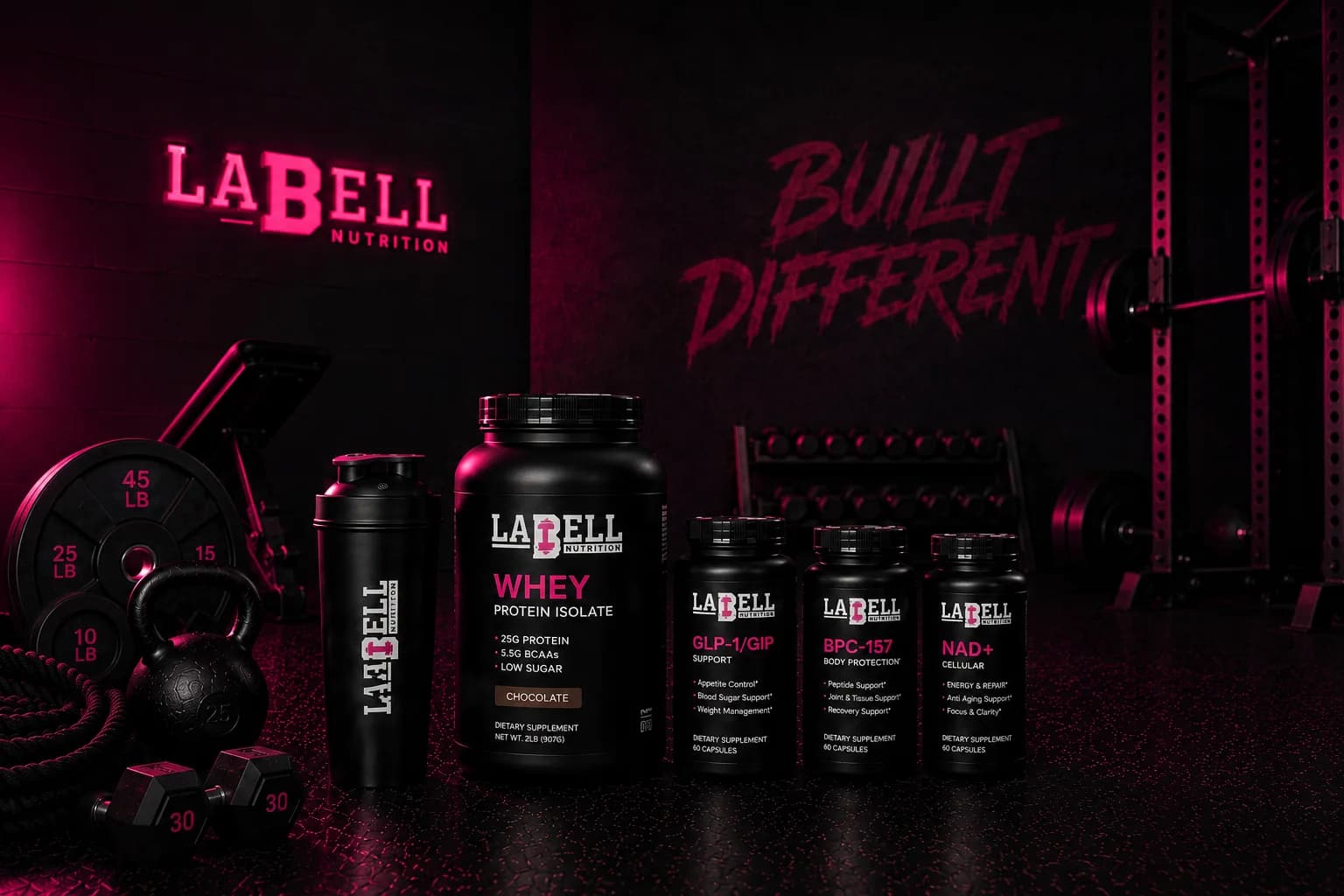
Most supplement brands compete on flavour, packaging and how loud the label shouts. La Bell Nutrition competes on something harder to fake: whether the amounts inside the tub match what the label claims, and whether a real person picks up the phone when you ask about it. This is what the brand actually stands on.
The problem with the supplement aisle
The supplement aisle is built to confuse you. Labels lead with ingredient names you recognise from a study, then bury the amount — or hide it inside a "proprietary blend" so you cannot tell whether you are getting a meaningful amount or a rounding error. Both products look identical on the shelf. Only one of them does anything.
It works because verifying it is tedious. You would have to know which ingredient matters, what a meaningful amount of it looks like, and then find that number on a label engineered to obscure it. Most people reasonably give up and buy on price, flavour, or whoever is loudest on social media.
La Bell Nutrition exists because founder Sidney La Bell Olivas got tired of watching people spend money on products engineered for the shelf instead of the body. The fix is not complicated. It is just inconvenient for anyone whose margins depend on token amounts.
Every amount, printed in full
Every La Bell formula lists its active ingredients with the exact amount in a serving — not a sprinkle added so the name can appear on the panel. If an ingredient cannot justify its place at a meaningful amount, it does not go in.
That decision has a cost. Meaningful amounts take up real space and real money, which means fewer ingredients per formula and a higher cost per tub than a label stuffed with twenty token extras. We think a formula that does four things properly beats one that claims twenty and delivers none.
It also means the label is readable. Every amount is printed. You can take any La Bell panel, look up the ingredient, and check our numbers yourself. That is the entire point.
No proprietary blends. Ever.
A proprietary blend lets a brand list impressive ingredients while disclosing only the combined weight. A 5 g "performance matrix" might be 4.9 g of a cheap filler and a dusting of the ingredient you actually came for. It is legal, it is common, and it makes the product impossible to evaluate.
La Bell does not use them. Not in protein, not in thermogenics, not anywhere. If you cannot see into a formula, you cannot judge it — and a brand that will not let you judge it is telling you something.
Third-party tested. Made in the USA.
Batches go to independent labs for identity and purity before they reach you — confirmation that what is on the label is what is in the container, and that nothing unwanted came along with it.
Manufacturing stays domestic, in facilities following current Good Manufacturing Practices, rather than being sourced from the cheapest overseas supplier. It narrows the supply chain to something that can actually be checked.
A real human on the other end
La Bell is owned by an active-duty military spouse and run out of Temple, Texas. There is no call centre and no chatbot. When you call or text 719-430-1005 about a formula, what to pair it with, or whether a product is even right for you, Sidney answers.
That is only possible at a certain scale, and it is a deliberate constraint. A founder who has to personally defend every formula has a strong incentive not to ship a bad one.
If you want the reasoning behind any product in the range, ask. You will get an ingredient-by-ingredient answer, including the parts where the honest response is "that one is not worth your money."